
AI Tools and Productivity
How AI Shopping Agents Work: Walmart's Open Door vs Amazon's Block in 2026
By ProAccess Team, ProAccess.me · 25 October 2026 · 8 min read
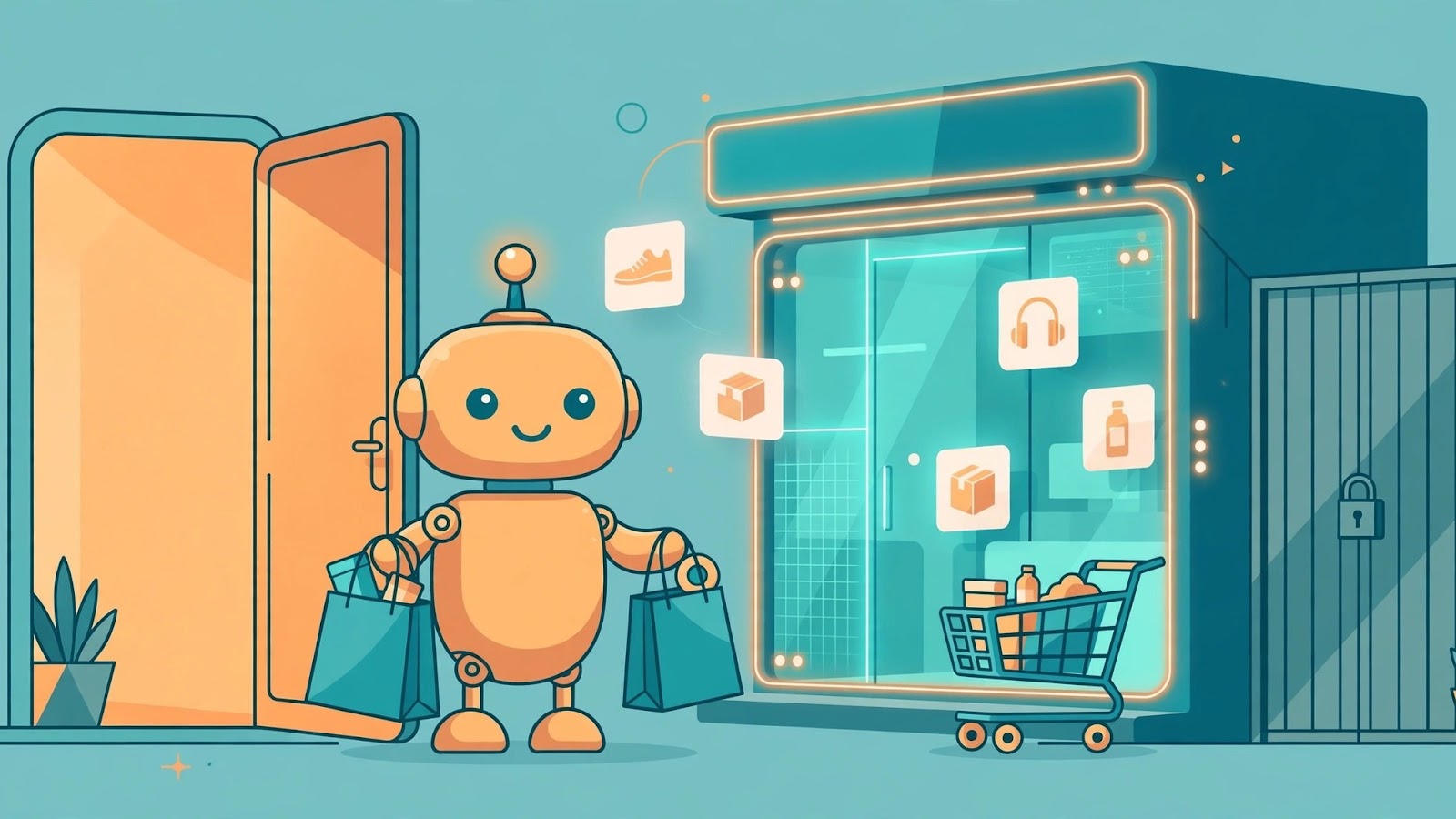
You already ask a chatbot what to buy. The next step is stranger: the chatbot buys it for you. On October 21, 2026, Walmart opened its store to that future, announcing an Agent Gateway that lets approved AI agents search its shelves and check out on a shopper's behalf. In the same week, Amazon moved in the opposite direction, blocking outside AI agents from buying on its store. Two of the world's biggest retailers have now taken opposite sides of the same question — and whichever side wins will change how all of us shop.
This guide explains what AI shopping agents actually are, how Walmart's system works, why Amazon said no, and how to stay in control if you ever hand your shopping list to an agent.
What Is an AI Shopping Agent?
An AI shopping agent is software that does more than answer questions: it takes a goal — "buy my weekly groceries under ₹5,000" or "find the cheapest 65W charger with same-day delivery" — and carries it out across websites. It searches, compares options, applies your constraints, and, when you allow it, completes the purchase.
That last step is what separates an agent from an assistant. A chatbot recommends; an agent acts. The difference matters because acting involves your money, your address, and your payment method, so the rules around it matter as much as the technology.
How an agent differs from a normal chatbot
- Chatbot: answers "which vacuum should I buy?" with a list and links. You do the buying.
- Shopping agent: takes "buy the best-rated vacuum under my budget" and returns an order confirmation — or asks you to approve it first.
- Agent with limits: the safer middle ground: it can search and shortlist freely, but every purchase needs your approval or stays under a spending cap you set.
What Walmart Actually Announced
Walmart's October 21 announcement, discussed by CEO John Furner at the Masters of Scale Summit in San Francisco, has three parts:
1. The Agent Gateway
The Agent Gateway is a server built on the Model Context Protocol (MCP), the open standard Anthropic created for letting AI agents connect to outside tools and data. Approved agents get a direct, sanctioned route to search Walmart and Sam's Club inventory and place orders, instead of scraping web pages or pretending to be a human shopper.
2. Agent Profiles
Rolling out over the coming weeks, Agent Profiles give each AI agent its own profile inside your Walmart account — similar to adding an authorised user to a credit card. You can see an agent's purchases separately from your own, require approval for every transaction, or set a spending limit. A profile is created the first time you use an agent through the Gateway, and you can delete it at any time. No Walmart+ membership is required.
3. Terms for AI agents
Walmart also published rules: agents must not act beyond what the shopper intends, must not change a customer's payment method, and never receive payment card details. Agents that break the rules get blocked, and the company's standard return policy applies to agent orders.
Why Amazon Blocked Agents Instead
Amazon's reasoning is commercial as much as technical. An outside agent that browses and buys without viewing product pages bypasses sponsored listings — the advertising that earns Amazon large revenues — and skips the upsells and recommendations the storefront is designed to show. Amazon also promotes its own assistant inside its store, so an outside agent is a rival for the shopper's attention, not just a tool.
Walmart, with a smaller share of online sales, has the opposite incentive: meeting shoppers inside ChatGPT, Gemini, or Meta's Muse brings reach it might not win on its own website. The same technology is therefore a threat to one retailer and an opportunity to another.
Walmart vs Amazon: The Split at a Glance
| Question | Walmart | Amazon |
|---|---|---|
| Outside AI agents allowed to buy? | Yes, through the Agent Gateway | No, outside agents blocked |
| How agents connect | MCP-based Agent Gateway (beta) | No sanctioned route |
| Shopper controls | Agent Profiles, approvals, spending limits | First-party assistant only |
| Agent access to payment details | Never | Not applicable |
| Returns on agent orders | Standard return policy applies | Standard policy for own-channel orders |
How an AI Shopping Agent Buys, Step by Step
- You state the intent. "Restock my usual groceries, same brands, under ₹5,000." Vague instructions produce surprising orders; precise ones do not.
- The agent searches. Through a gateway or integration, it checks inventory, prices, and availability — without seeing your full purchase history or payment details.
- It shortlists against your rules. Brand, budget, delivery window, and dietary or size constraints filter the options.
- You approve — or it stays under your cap. Either every purchase needs a tap from you, or the agent may only spend up to the limit you set.
- It orders, and you review. The order appears under the agent's profile, separate from your own purchases, so you can spot mistakes and return them under the normal policy.
Safety Checklist Before Letting an Agent Spend Your Money
- Start with a low spending limit — ₹1,000 or ₹2,000 — and raise it only after a few correct orders.
- Require approval for every purchase in the first month, even if that feels slower.
- Give the agent one profile per task (groceries, electronics, gifts) so a mistake in one area cannot spill into another.
- Never share your card details, passwords, or one-time codes with an agent or a chatbot, even if it asks.
- Review the agent's orders weekly, the way you would review a bank statement.
- Delete an agent profile the moment you stop using that agent.
What This Means for Small Sellers and Freelancers
If agents become a real shopping channel, the storefront changes. An agent does not browse banners or get tempted by a sponsored slot; it reads structured facts — price, availability, delivery time, return policy — and picks the best match for its instructions. For a small seller, that means clear, accurate listings matter more than flashy ones: honest prices, real stock status, and a plain returns policy are what an agent can actually use.
The same logic applies to freelancers and small teams building with AI. The retailers' split shows that the winning move is rarely to fight automation — it is to give it a rules-bound path, the way Walmart did, rather than a locked door.
Tools That Help You Work With Agents
If you want to experiment with agentic workflows yourself, start with tools built for the job. A general-purpose agent platform like Manus AI shows what a task-doing agent can handle end to end, from research to delivery. If you prefer to build your own automations — for example, a workflow that watches a price and alerts you before it moves — n8n Starter gives you a visual way to connect apps and agents without writing a full application. And because agents run on live data, Apify is useful for gathering structured product and price information that your own tools can reason over.
The point is not to hand your wallet to the first agent you meet. It is to learn the pattern — intent, limits, approval, review — on small tasks, so that when agent checkout arrives at your favourite store, you already know how to stay in charge of it.
Frequently Asked Questions
Can an AI shopping agent see my credit card details?
Under Walmart's published terms, no: agents never receive payment details. That is one of the core protections of the Gateway model, and it is a question worth asking of any agent service before you use it.
Is Walmart's Agent Gateway available now?
The Gateway is in beta for companies and developers, and Agent Profiles roll out over the coming weeks. Everyday shoppers will see it appear as their chosen agent apps connect through it.
Why does Amazon block shopping agents?
Outside agents can bypass sponsored listings and upsells, weakening the advertising and merchandising model of the storefront, and Amazon prefers shoppers to use its own assistant. Walmart, with different incentives, chose the opposite approach.
What happens if an agent buys the wrong item?
Walmart applies its standard return policy to agent orders, and because the order sits under the agent's own profile, it is easy to find and return. Keep your approval setting on for high-value categories to catch mistakes before they ship.
Do I need Walmart+ to use an AI shopping agent?
No. Walmart has said Agent Profiles work for any Walmart account holder, with no Walmart+ membership required.
Will other retailers follow Walmart or Amazon?
That is the open question. Watch whether Target, Costco, and other large retailers build their own MCP-style gateways or keep agents out. The early signal favours a split: retailers that earn most from on-site advertising will resist, while those chasing reach will open up.
Conclusion
AI shopping agents are no longer a demo — they are a policy decision, and the two biggest retailers have just made opposite ones. Walmart is betting that sanctioned, limited, observable agents will bring it more shoppers. Amazon is betting that keeping agents out protects the store it built. For you, the practical move is the same either way: learn the controls now, start with small limits and approvals on, and let an agent earn your trust one correct order at a time. And if you want to explore the agent side of this shift, Manus AI on ProAccess.me is a good place to start.
FAQ
Can an AI shopping agent see my credit card details?
Under Walmart's published terms, no: agents never receive payment details. That is one of the core protections of the Gateway model, and it is a question worth asking of any agent service before you use it.
Is Walmart's Agent Gateway available now?
The Gateway is in beta for companies and developers, and Agent Profiles roll out over the coming weeks. Everyday shoppers will see it appear as their chosen agent apps connect through it.
Why does Amazon block shopping agents?
Outside agents can bypass sponsored listings and upsells, weakening the advertising and merchandising model of the storefront, and Amazon prefers shoppers to use its own assistant. Walmart, with different incentives, chose the opposite approach.
What happens if an agent buys the wrong item?
Walmart applies its standard return policy to agent orders, and because the order sits under the agent's own profile, it is easy to find and return. Keep your approval setting on for high-value categories to catch mistakes before they ship.
Do I need Walmart+ to use an AI shopping agent?
No. Walmart has said Agent Profiles work for any Walmart account holder, with no Walmart+ membership required.
Will other retailers follow Walmart or Amazon?
That is the open question. Watch whether Target, Costco, and other large retailers build their own MCP-style gateways or keep agents out. The early signal favours a split: retailers that earn most from on-site advertising will resist, while those chasing reach will open up.
Looking for premium tools?
Browse ProAccess store